
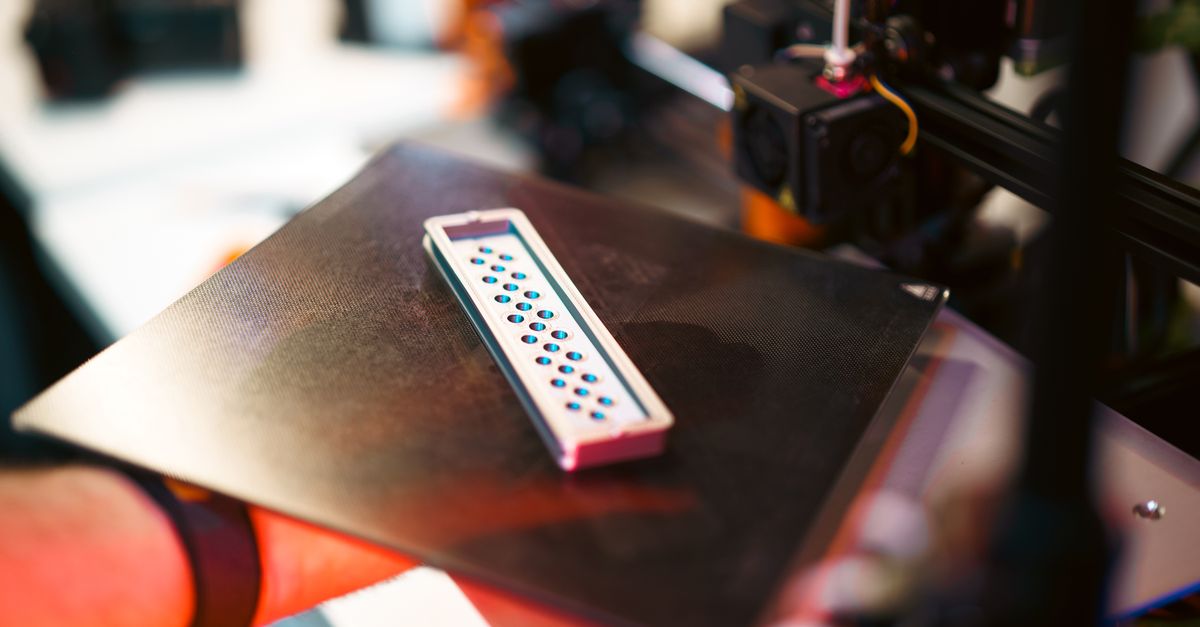
Photo by Jakub Zerdzicki on Pexels
Part Marking & Traceability in 3D Printing

Part Marking & Traceability in 3D Printing
Manufacturing traceability isn’t just for traditional production anymore. As 3D printing moves from prototyping into production, businesses need ways to track parts, manage quality control, and maintain compliance documentation. The good news? 3D printing offers unique advantages for implementing part marking and traceability systems that would be expensive or impossible with traditional manufacturing.
Why Part Marking Matters More Than Ever
Regulatory compliance drives adoption. Industries from medical devices to aerospace require clear part identification and batch tracking. Even consumer products increasingly need traceability for warranty management and recall procedures. 3D printing makes it possible to embed this information directly into parts during production - no secondary operations required.
Quality control gets easier with proper tracking. When you can trace a part back to its print file version, material batch, and production date, troubleshooting becomes straightforward. This matters whether you’re producing 10 units or 1,000.
Direct Marking Methods for 3D Printed Parts
Raised Text and Numbers
The simplest approach embeds alphanumeric codes directly into part geometry. FDM printing handles raised text well when designed properly:
- Minimum text height: 0.5mm (though 1mm is more reliable)
- Minimum line width: Match your nozzle diameter (typically 0.4mm)
- Sans-serif fonts work best - avoid thin serifs
- Orient text perpendicular to layer lines when possible
Design tip: Create text as actual geometry in your CAD model rather than relying on slicer text tools. This gives you better control over dimensions and ensures consistency across different slicing software.
Recessed Markings
Sometimes raised text isn’t practical due to clearance or aesthetic requirements. Recessed markings work well for:
- Parts with tight assembly clearances
- Smooth exterior surfaces where raised features would interfere
- High-wear applications where raised text might abrade
Recessed text requires slightly different parameters: aim for 0.8mm minimum depth and ensure your slicer doesn’t try to fill small recesses with support material.
Photo by Jakub Zerdzicki on Pexels
QR Codes and 2D Barcodes
Modern 3D printing can reliably produce scannable QR codes directly on parts. This opens up significant possibilities:
- Link to digital documentation and certificates
- Store production parameters and material data
- Enable field service technicians to access repair procedures
- Track parts through assembly and shipping
Technical requirements for 3D printed QR codes:
- Minimum module size: 0.8mm x 0.8mm
- Error correction level: High (30%)
- Contrast: Use color change or depth variation
- Size: 15mm x 15mm minimum for reliable scanning
Digital Thread: Connecting Physical Parts to Data
The real power comes from linking physical markings to digital records. A QR code or serial number becomes the key to accessing comprehensive part data:
- STL/3MF file version and timestamp
- Material type and supplier batch number
- Print parameters (temperatures, speeds, layer height)
- Post-processing steps completed
- Quality inspection results
- Customer and order information
Cloud-based PLM (Product Lifecycle Management) systems now integrate with 3D printing workflows. When you scan a part’s QR code, you can instantly access its complete production history.
Implementing Version Control
3D printing’s iterative nature means designs change frequently. Proper version control prevents mixing old and new revisions:
- Embed version numbers in part geometry
- Use consistent naming conventions (v1.0, v1.1, etc.)
- Archive every production file version
- Document what changed between versions
- Consider adding date codes (YYWW format works well)
Material Batch Tracking Strategies
Track your filament like traditional manufacturers track raw materials. This becomes critical for:
- Meeting industry certifications (ISO 9001, AS9100)
- Investigating part failures or quality issues
- Proving material compliance for regulated industries
- Managing material shelf life and storage conditions
Create a simple system:
- Assign batch codes to each filament spool
- Log when each batch goes on each printer
- Record environmental conditions during printing
- Link parts to their material batches in your database
Compliance Documentation Made Simple
Different industries have different requirements, but 3D printing can accommodate most:
Medical Device Identification
FDA’s Unique Device Identification (UDI) requirements can be met through:
- Direct part marking with required identifiers
- QR codes linking to GUDID database entries
- Lot and batch tracking for traceability
Automotive and Aerospace
These industries typically require:
- Part numbers and revision levels
- Date of manufacture
- Material certifications
- Supplier identification codes
Consumer Products
Even non-regulated products benefit from:
- Serial numbers for warranty tracking
- Date codes for quality control
- Recycling symbols for end-of-life
- Brand protection through unique identifiers
Practical Implementation Tips
Start simple and scale up. Begin with basic serial numbers before implementing full QR code systems. Here’s a practical progression:
- Phase 1: Add simple date codes (YYWW) to all parts
- Phase 2: Implement sequential serial numbers
- Phase 3: Create digital records linked to serials
- Phase 4: Add QR codes for instant data access
- Phase 5: Integrate with ERP/MRP systems
Consider marking location carefully. Place identifiers where they’re:
- Visible after assembly
- Protected from wear
- Not affecting part function
- Easy to scan or read
- Aesthetically acceptable
Test your marking methods. Before committing to a system:
- Print test coupons with various text sizes
- Verify QR codes scan reliably
- Check marking durability for your application
- Ensure markings survive post-processing
Software Tools and Automation
Several software platforms now automate part marking:
- CAD plugins that add serial numbers parametrically
- Slicer scripts that insert unique identifiers
- MES integration that assigns numbers automatically
- Database systems that track everything centrally
For businesses using services like ours, we can implement your marking requirements directly. Just provide your numbering scheme or compliance requirements with your files.
The Business Case for Traceability
Implementing proper part marking pays for itself through:
- Reduced time investigating quality issues
- Faster response to customer inquiries
- Simplified compliance audits
- Better inventory management
- Enhanced brand protection
- Improved customer confidence
The minimal added print time (typically under 2%) is negligible compared to these benefits.
Looking Forward: Smart Parts and IoT
The next evolution combines 3D printed parts with embedded electronics:
- NFC tags molded into parts during printing
- Conductive filaments creating antenna structures
- Embedded sensors for condition monitoring
- Blockchain verification of part authenticity
While these technologies are emerging, the fundamentals of part marking and traceability remain constant: know what you made, when you made it, and how to track it through its lifecycle.
Ready to Implement Part Traceability?
Whether you need simple serial numbers or complex QR code systems, we can help implement part marking that meets your requirements. Our design team understands compliance needs across industries and can ensure your parts include proper identification from the start.
Let’s discuss your traceability needs. Start your custom project today and we’ll help you implement a marking system that scales with your business.
Related Resources
Related Articles
Waterproofing 3D Prints: Methods & Materials
Learn proven techniques to make FDM 3D printed parts waterproof for outdoor and liquid-contact applications.
3D Printing Validation Testing Guide
Master validation testing for 3D printed parts with dimensional checks, strength tests, and material verification methods.
Cost-Per-Part Calculator for 3D Printing
Master the hidden variables that determine your true 3D printing costs and make smarter sourcing decisions.