

Resin 3D Printing Guide: SLA and MSLA

If you’ve ever held a resin 3D printed part next to an FDM print, the difference is immediately obvious. Surfaces are glass-smooth. Details are razor-sharp. Layer lines are virtually invisible to the naked eye. For Charlotte, NC businesses and creators who need the highest possible detail from 3D printing, resin is the process to know.
This guide covers what resin 3D printing is, how it works, what materials are available, and when it’s the right choice for your project.
What Is Resin 3D Printing?
Resin 3D printing uses a UV light source to cure liquid photopolymer resin into solid plastic, one ultra-thin layer at a time. Unlike FDM printing, which melts and extrudes plastic filament, resin printers selectively harden a pool of liquid resin with precisely controlled light.
There are three common variants:
- SLA (Stereolithography): A UV laser traces each layer’s cross-section across the resin surface. Widely used in dental and jewelry industries.
- MSLA (Masked Stereolithography): An LCD screen masks UV light, curing an entire layer at once. The most common desktop resin process today.
- DLP (Digital Light Processing): Uses a digital projector instead of an LCD. Common in professional and industrial settings.
All three produce parts with layer heights as fine as 0.025mm (25 microns), roughly five times finer than a typical FDM print. The result is surfaces smooth enough to pass for injection-molded plastic and details fine enough to capture facial expressions on a 28mm miniature.
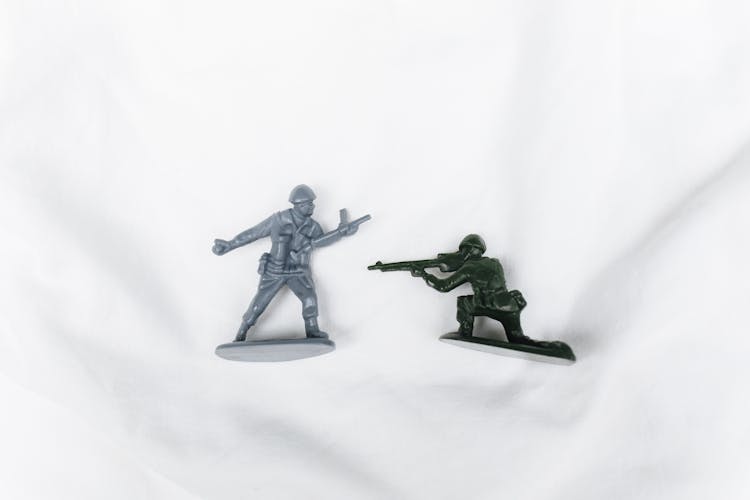
How Resin Differs from FDM
FDM heats plastic filament and deposits it through a nozzle, building parts line by line. The minimum feature size is limited by nozzle diameter (typically 0.4mm), and layer lines are visible. FDM excels at strong, functional parts in engineering-grade materials at larger build volumes.
Resin cures liquid photopolymer with UV light, solidifying entire layers at once. Features as small as 0.05mm are possible, and layer lines are nearly invisible. Resin excels where surface finish and fine detail are the top priority.
The trade-off is straightforward: resin wins on detail and surface quality, while FDM wins on build volume, material variety, mechanical strength, and ease of handling. Most North Carolina shops, including ours, run both processes and recommend the right one based on your project requirements.
Types of Resin
Different resin formulations serve different applications. Choosing the right resin is just as important as choosing the right FDM filament:
| Resin Type | Properties | Best Applications |
|---|---|---|
| Standard Resin | Smooth finish, good detail, rigid, affordable | Visual prototypes, miniatures, display models |
| Tough / ABS-Like Resin | Higher impact resistance, slight flex before breaking | Functional prototypes, snap-fit housings, parts that see handling |
| Flexible Resin | Rubber-like, compressible, high elongation | Gaskets, soft-touch prototypes, wearable prototypes |
| Castable / Wax Resin | Burns out cleanly with no ash residue | Investment casting, jewelry masters, metal casting patterns |
| Engineering Resin | High temperature resistance, high tensile strength | End-use industrial parts, heat-resistant tooling, high-stress components |
| Dental / Biocompatible Resin | FDA-cleared, safe for oral contact, dimensionally stable | Dental models, surgical guides, orthodontic aligners, medical devices |
For Charlotte, NC clients, we stock standard, tough, and castable resins and can source specialty formulations for specific project requirements. If you’re not sure which resin type fits your application, we’ll recommend the best option based on what the part needs to do.
Best Applications for Resin 3D Printing
Resin shines where detail, surface finish, and small-scale dimensional accuracy outweigh the need for toughness or large part size:
- Jewelry masters and casting patterns. Castable resin produces burn-out-ready patterns for investment casting. Charlotte-area jewelers use resin printing to go from CAD to cast metal in days.
- Dental models and appliances. Orthodontic models, surgical guides, and crown-and-bridge models in biocompatible resin with clinical-grade accuracy.
- Tabletop miniatures and figurines. Character miniatures, monsters, and display pieces with detail that rivals hand-sculpted originals. See our tabletop gaming miniatures service.
- Detailed prototypes. When your prototype needs to look like a finished product, resin delivers injection-mold-quality surfaces without tooling.
- Microfluidics and small precision parts. Channels, ports, and features below 0.5mm that FDM cannot reproduce.
- Master patterns for mold making. Smooth resin masters produce cleaner silicone molds, saving time on short-run production.
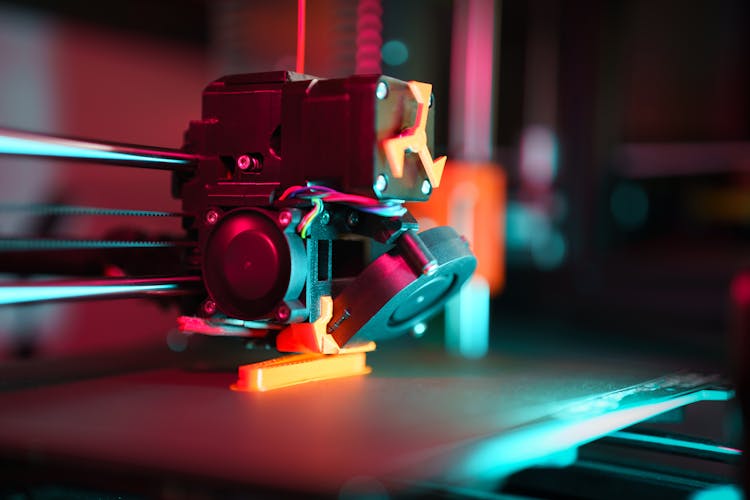
Resin Strengths
- Incredible surface detail. Features as small as 0.05mm reproduced faithfully. Text, textures, and organic shapes print with clarity that FDM cannot match.
- Layer lines nearly invisible. At 25-50 micron layer heights, surfaces appear smooth to the naked eye and feel smooth to the touch.
- Excellent dimensional accuracy at small scale. Tolerances of +/- 0.1mm are achievable, making resin ideal for assemblies with tight fit requirements.
- Smooth finish without sanding. Parts come off the printer ready for painting, molding, or presentation. A quick wash and UV cure is all that’s needed.
Resin Limitations
Resin is not the right process for every project:
- Smaller build volume. Most resin printers have build plates in the 130mm x 80mm to 220mm x 130mm range. Larger parts may need to be split and assembled.
- Standard resin is brittle. Basic formulations crack under impact. Tough resins improve this, but FDM materials like PETG and nylon are still stronger for functional parts.
- UV post-curing required. Every resin print must be washed in isopropyl alcohol and cured under UV light after printing, adding time and equipment.
- Messy handling. Uncured resin requires gloves, ventilation, and careful cleanup. It’s not a grab-and-go process like FDM.
- Higher cost per part. Resin is more expensive than FDM filament by volume, and smaller build volumes mean fewer parts per run.
- UV degradation. Parts left in direct sunlight yellow and become brittle. Outdoor or sun-exposed parts need UV-resistant coatings.
- Toxic uncured resin. Liquid photopolymer is a skin irritant and should never contact bare skin. Proper PPE is mandatory.
Resin vs FDM: Which Should You Choose?
Choose resin when: You need ultra-fine detail, smooth surfaces, small precision parts, casting patterns, or visual prototypes that look like finished products.
Choose FDM when: You need mechanical strength, larger parts, heat resistance, or cost-effective production at volume. See our FDM materials guide for a deep dive into PLA, PETG, ABS, nylon, and TPU.
Use both when: Your project includes detailed and structural components. Many of our North Carolina clients combine resin miniatures with FDM terrain, or resin master patterns with FDM production tooling.
When to Choose Resin
Resin is the right call when your project checks one or more of these boxes:
- The part has fine details or features below 1mm
- Surface finish matters for the end use (visual prototypes, product mockups, display pieces)
- You need a casting pattern for investment casting or mold making
- Dimensional accuracy at small scale is critical
- The part fits within resin build volumes
- You’re producing tabletop miniatures or collectible figurines
If you’re working on a project in the Charlotte, NC metro, including Lake Norman, NC and the surrounding North Carolina Piedmont, and you’re not sure whether resin or FDM is the right process, we’re happy to review your files and recommend the best approach.
Explore Our Other Material Guides
Resin not the right fit? Check out our FDM material guides for larger or more functional parts:
- PLA Guide - Affordable prototyping with excellent surface finish
- PETG Guide - Tough, chemical-resistant functional parts
- ABS Guide - High heat resistance with vapor-smoothable finish
- ASA Guide - UV-stable for outdoor and weather-exposed parts
- TPU Guide - Flexible, rubber-like parts for gaskets and grips
- Full Materials Comparison - Every material compared side by side
Get Your Resin Project Started
Ready to put resin printing to work? Submit your project files and requirements and we’ll provide a quote with material recommendations, timeline, and pricing. Include details about the part’s intended use so we can recommend the best resin type for your application.
For projects that need design work, our custom design services can take your concept from sketch to print-ready file. Whether you have a finished CAD model or just an idea, we’ll help you get to a finished part.
Related Articles
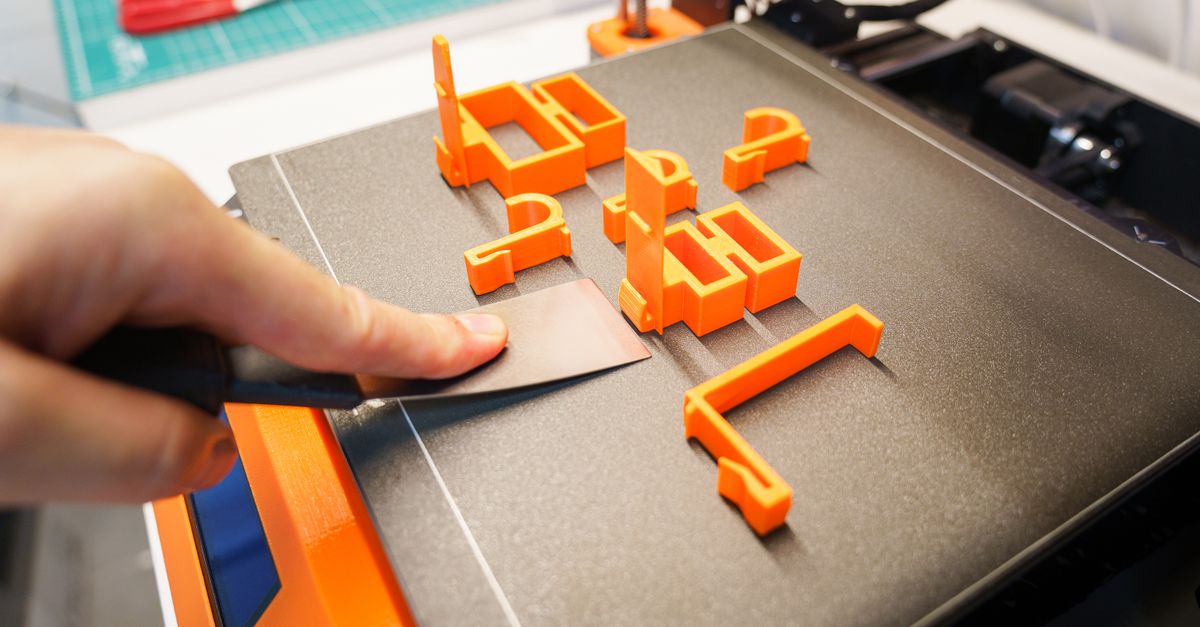
Waterproofing 3D Prints: Methods & Materials
Learn proven techniques to make FDM 3D printed parts waterproof for outdoor and liquid-contact applications.
Temperature Control Secrets for FDM Success
Master temperature settings for FDM printing. Learn optimal temps for PLA, PETG, and ABS to get quality parts.
Engineering Grade Plastics Cost Less Than You Think
Engineering plastics like PETG deliver professional results without premium pricing. Learn smart material selection.